

How to Become a Dental Treatment Coordinator: Education, Skills, Programs & More
Treatment coordinators are an important part of the orthodontic or dental care team. They perform a wide variety of roles to support patients and their families through the dental treatment experience and manage communication and cooperation between patients, doctors, and support staff.
While not every dental office employs treatment coordinators, every office will have a support staff that will take care of some or all of the duties of a treatment coordinator. This position requires a variety of skills: people skills, management and organizational skills, and comfort with a fast-paced, high-energy environment.
If this sounds like the job for you, read on to find answers to all your questions about becoming an dental or orthodontic treatment coordinator.
Dental Treatment Coordinator Job Overview
The treatment coordinator's primary responsibility is patient experience: they serve as the patient’s concierge throughout the dental care experience.
The treatment coordinator (or TC) ensures that the patient and the patient’s family are kept informed and included in all matters of the dental treatment. The TC’s role is especially important at the beginning of care: treatment coordinators meet with patients and their families for new patient examinations, to gather medical history, discuss treatment options, and answer all payment questions.
Once treatment begins, treatment coordinators communicate with patients and their families to keep track of payment schedules, appointments, and post-treatment follow-up care.
Some duties include:
- Gathering information from new patients
- Introducing patients and families to the dental office and treatment team
- Educating patients and families on treatment options, costs, and setting up payment plan
- Communicating with patients/families for appointments, payment schedules, etc
- Submitting paperwork to insurance providers
- Communicating patient needs and questions to dentist and staff
Treatment coordinator positions may be full-time or part-time, depending on the dental office. Whether you’re full or part time will impact whether you are paid hourly or as an annual salary.
According to the employment data site Glassdoor, orthodontic or dental treatment coordinators can expect to make an average of $27/hour, or a salary of $39,438. This is an average of salaries from across the country: pay ranges considerably depending on the region where you live, the experience of the individual, and more.
Many orthodontist or dental offices offer benefit packages for treatment coordinators, especially if they are full-time employees. Be sure to ask about benefits, including health insurance and paid time off, when you are seeking a position as a treatment coordinator at a new office.
Qualities of a Great Treatment Coordinator
Treatment coordinators are the liaison between patients and their families and the dental treatment team. For that reason, the position is fundamentally a people-person job. Individuals who thrive in a highly social, fast-paced, energetic environment are likely good fits for treatment coordinator positions.
Treatment coordinators also manage multiple cases at once, so the position requires excellent organizational skills.
According to the industry magazine Dental Economics, the following skills help to make a great treatment coordinator:
- Excellent communication skills
- Poise and professional demeanor
- Organized and systematic
- Ability and patience to navigate insurance providers and other communications
- Self-confidence without an ego
- Positive attitude
- Ability to think quickly and adapt to changing situations
What is Required to Become an Orthodontic or Dental Treatment Coordinator?
To earn a position as treatment coordinator, either dental or orthodontic, applicants typically need a high-school diploma. This job does not require an advanced degree, but most offices will require at least a high-school diploma or the GED equivalent. There is no certification or licensing necessary to become a treatment coordinator, and training generally takes place on the job, by following another treatment coordinator in the office.
You will also have to be 18 years of age and legally permitted to work in the United States.
Depending on the dental office, the TC position may also require some work experience, preferably in customer service. Many treatment coordinators start out as office assistants and rise the ranks to become treatment coordinators.
How to Find an Orthodontic or Dental Treatment Coordinator Job
If you’re ready to pursue a career as a treatment coordinator, it’s time to start looking for a job! There are multiple ways to find a treatment coordinator position in your area.
- Online job sites like Indeed, ZipRecruiter, Craigslist, or CareerBuilder. Many dental practices post on these sites seeking new recruits. Plus, you can filter for preferences like part or full-time work, minimum pay, and proximity to your home, to ensure you’re finding the right fit for your lifestyle.
- Contact practices in your area. Do an online search for local dental practices, and give them a call, send an email, or even drop by to inquire about any open positions. They may not be hiring at the moment, but a proactive approach might make you an appealing candidate when a position opens.
- Search dental job boards like dentalpost.net: these online sites are exclusively for positions in the dental field, which can make for an easier search experience.
- Ask your friends and family in the dental field. Do you know anyone currently working in the dental industry? Ask about possible positions in their office, or if they know other nearby practices that are hiring. Having someone vouch for your personality and responsibility can also go a long wat when it comes to getting hired.
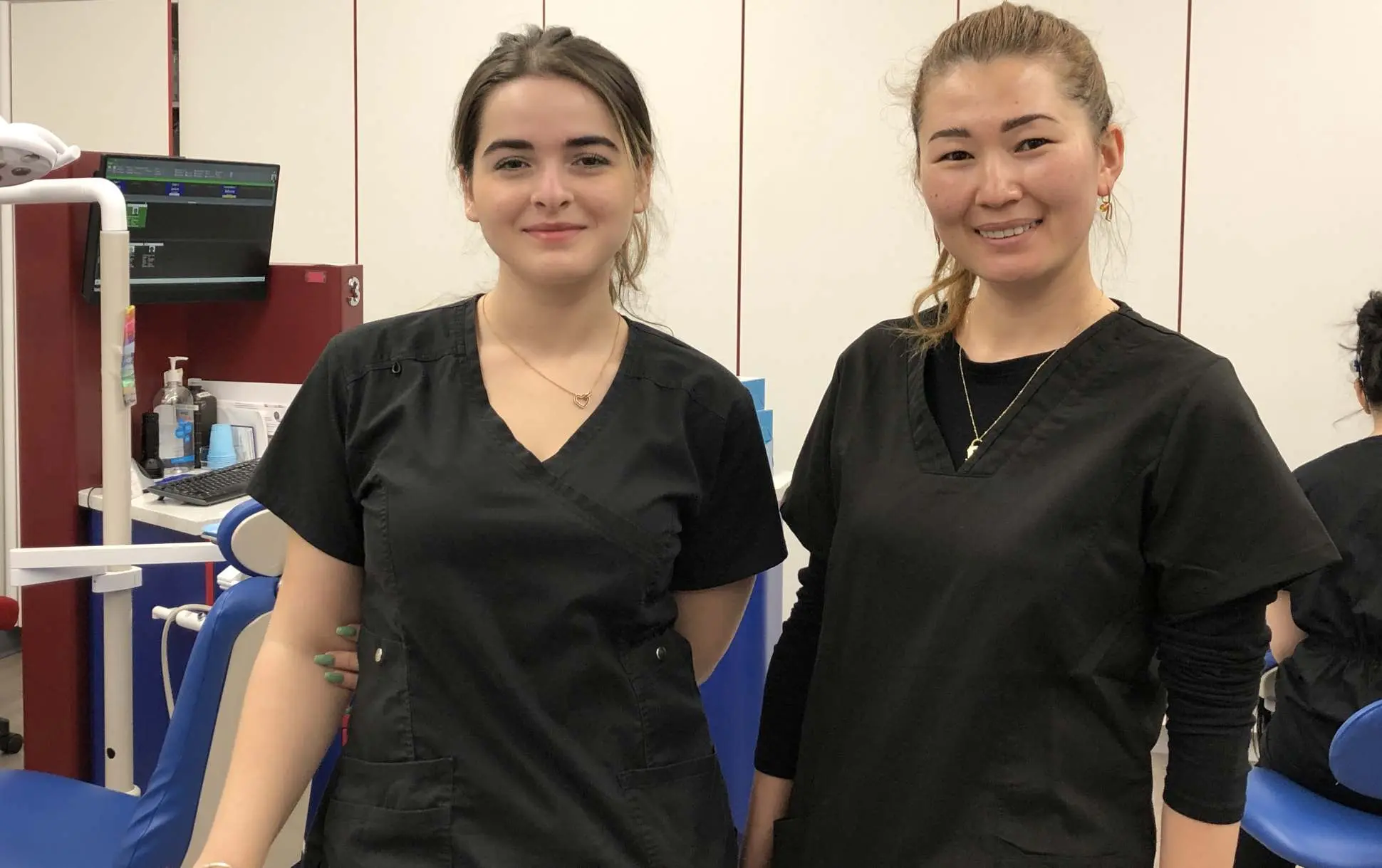
Interested in a treatment coordinator with Diamond Braces?
Learn More About Careers in Dental Assisting:
- Dental Assistant Job Description: Salary, Skills, Outlook & More
- Dental Assistant Interview Questions & Best Answers
- How to Become a Dental Assistant: Complete 2020 Guide
More About Careers
New Orthodontic Residency Graduates
you’re a brand-new orthodontist who recently graduated or is about to graduate. You’ve put in the work, passed all the tests, and threw your cap into the sky to finally call yourself an orthodontist. But you’re left with a question that haunts every new graduate – now what? It can be daunting for new orthodontists to try and navigate the confusing landscape of being a standalone professional running their own business, which is why many graduates opt to join group practices.
Read More About New Orthodontic Residency GraduatesDental Office Manager
Orthodontic office managers are responsible for a wide array of tasks in their day-to-day operations. Like office managers in any industry, orthodontic office managers play a pivotal role in many different aspects of an office – but they also have unique duties related to the field of orthodontics.
Read More About Dental Office ManagerOrthodontist
All orthodontists are dentists, but not all dentists are orthodontists. In fact, orthodontists receive specialized training that makes them uniquely suited to the art of straightening teeth. To become an orthodontist requires 2-3 more years of education before acquiring a certification in orthodontic care.
Read More About OrthodontistDental Assistant Career
Dental assistants are responsible for a variety of tasks in the dental or dental specialist’s office. The job responsibilities vary depending on the office, the certification requirements of the state, and the training and certification level of the individual assistant.
Read More About Dental Assistant CareerDental Assistant Interviews
Landed an interview for your dream dental assistant job? Congrats! Now the question is – how do you ace the interview? Luckily, we’ve got answers. This article will teach you everything to expect at an interview for a dental assistant job, and how to answer every question like a pro.
Read More About Dental Assistant InterviewsDental Hygienist Career
Dental hygienists serve a critically important role in the dental office or dental specialist office. Registered dental hygienists support dentists and specialists in a wide variety of daily procedures and patient care, and collaborate with the rest of the dental team to provide excellent care to their patients.
Read More About Dental Hygienist CareerDental Hygienist Interviews
Looking to stand out at your dental hygienist interview? These tips can help! In the guide below you’ll get specific advice on interviewing for a dental hygienist job – plus, you’ll find example answers and advice for common questions you’re likely to be asked during your interview.
Read More About Dental Hygienist InterviewsDental Office Manager Interviews
Being a dental office manager is hard work: you’re usually the person responsible for solving nearly every problem that happens throughout the day. For that reason, dental practice owners take their time when selecting the right office manager. They want to be sure that the person they hire will be able to take on the many responsibilities required of a manager of a busy practice.
Read More About Dental Office Manager InterviewsDentist Career
Interested in a career as a dentist? Great choice! The road to becoming a dentist is a long one, with a great deal of competitive training and expensive education. However, if you make it through dental school, being a dentist is a very enjoyable career: dentists enjoy high salaries, great work-life balance, and a flexible, rewarding job environment.
Read More About Dentist CareerDentist Interviews
You’ve made it through dental school, you passed your board exams – now, it’s time to get a job! Acing a job interview definitely isn’t the hardest part of becoming a dentist, but that doesn’t mean you shouldn’t prepare.
Read More About Dentist InterviewsDental Treatment Coordinator
Treatment coordinators are an important part of the orthodontic or dental care team. They perform a wide variety of roles to support patients and their families through the dental treatment experience and manage communication and cooperation between patients, doctors, and support staff.
Read More About Dental Treatment CoordinatorOrthodontic Assistant
Orthodontic assistants, like dental assistants, support the orthodontic team in a variety of tasks. They work in a fast-paced, team-oriented environment with a hard-working team of other dental professionals. If you’re quick on your feet, enjoy a social environment, and like working on a team, then a career in orthodontic assistant may be the right job for you!
Read More About Orthodontic AssistantOrthodontic Assistant Interviews
Once you’ve completed your dental assistant program and decided on a career in orthodontics, it’s time to start looking for a job! This guide can help you prepare for an interview in the orthodontic assistant industry, whether you’re a recent graduate or an experienced professional.
Read More About Orthodontic Assistant InterviewsOrthodontist Career
Becoming an orthodontist takes a great deal of time, money, and effort – but orthodontists consistently rate their career choice highly.
Read More About Orthodontist CareerOrthodontist Interviews
It’s important to be prepared before any interview, to ensure you’re putting your best foot forward. As Forbes notes, ahead-of-time research can make the difference between getting you the job and leaving you in the discard pile.
Read More About Orthodontist Interviews